
Written by Emma.
You buy the disc everyone in your group swears by, take it to the course, and it doesn’t fly like theirs. Before you blame your form, look at the plastic. The steel mold is the same, but the plastic poured into it decides how stiff the disc is, how it grips and how fast it wears, and you can see all three in the flight. Innova says so on its own flight ratings page: its plastics “can affect the flight ratings of our discs, especially the longer range drivers.” This guide goes through what changes between plastics, with Innova’s DX, Star and Champion and Discraft’s Pro D, ESP and Z as examples, and ends with what to buy for a first disc. For the Innova side in more detail, DiscField has a full DX vs Star vs Champion comparison.
What changes between plastics
Firmness is the big one. Firm plastic flexes less in flight, and Innova links firmness with stability: it describes its Champion line as “usually a little firmer and more stable than the same model in other plastics.” Star has the same flight characteristics as Champion, according to Innova, but is “slightly less firm.” At the soft end, GStar “stays flexible at very low temperatures”, which matters if you play through a northern winter.
Grip comes next. Softer, tackier plastic is easier to hold, especially with cold hands or a wet disc. Innova says DX gives “an excellent grip in a variety of weather situations”, and Discraft sums up its base Pro D line as “Best Grip, Best Value.”
Then there’s wear. Premium blends shrug off trees and pavement better. Innova says Champion will “avoid damage better than any other plastic”, and Discraft’s tagline for Z is “Maximum Durability, Translucent Color.” A disc that changes shape also changes how it flies, so durability ends up as a flight question too.
Innova adds one more detail for drivers: Champion generally produces “less high speed turn” than its other premium plastics, such as Star and GStar. Two premium plastics from the same company can still put a slightly different line on the same driver.
Innova: DX, Star and Champion
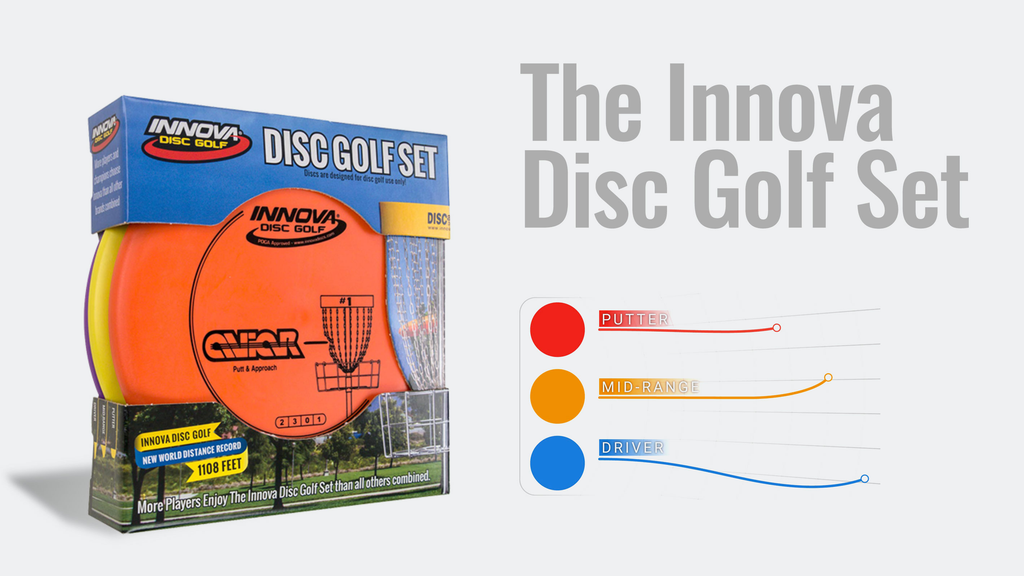
DX is Innova’s base plastic. It’s the cheapest (Innova lists DX at $11.99, Champion at $17.99 and Star at $18.99), it comes in the widest range of models and weights, and it grips well. It also wears in fastest. In Innova’s words, DX discs “wear in with usage and over time will eventually take on new and varied flight characteristics.”
Star is the grippy premium option. Innova says it has the durability of Champion with grip closer to its Pro plastic, and flies like Champion while feeling slightly softer.
Champion is the clear, firm one. Pick it when you want a disc to keep the same flight for as long as possible. On drivers it also tends to resist turning a little more than Star.
Discraft: Pro D, ESP and Z
Discraft keeps its descriptions short: Pro D is “Best Grip, Best Value”, ESP is “Pro Caliber, Swirled Color” and Z is “Maximum Durability, Translucent Color.” Its numbers say even less about plastic. Discraft rates the Zone 4 | 3 | 0 | 3 with a stability of 2.0 on every product page I checked, from Putter Line and Putter Line Soft to ESP FLX, Titanium and Recycled ESP. The plastics behind those identical numbers are not alike at all: Discraft calls the Putter Line Hard version stiff and the ESP FLX and Putter Line Soft versions softer and more flexible.
That’s why players still have favorites. Tõnis, who runs this site, says on his About page that his go-to approach disc is the Zone, “preferably in CryZtal Z plastic because of its overstability.” You won’t find that on the stamp; it comes from throwing the disc.
Why a disc gets less stable as it beats in
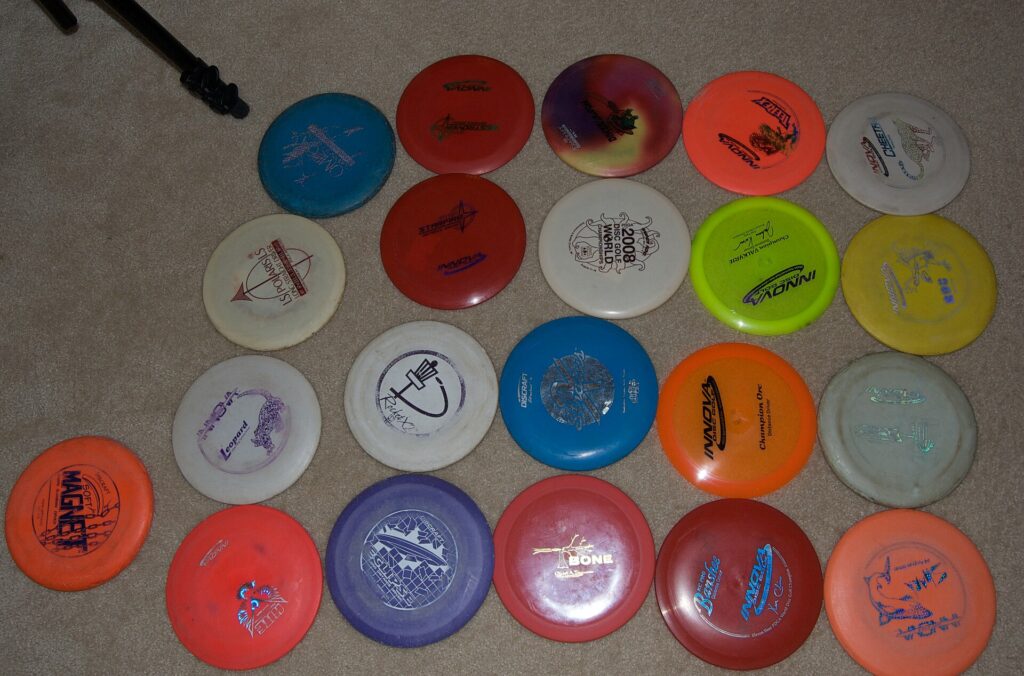
Every tree, chain and parking lot leaves a mark on the rim, and softer plastic also flexes a little on hard throws. Over hundreds of throws the disc drifts away from the shape it had when it left the mold. In practice, a worn disc usually turns more and fades less than a fresh copy of the same mold.
Innova puts it plainly: its DX, XT, KC Pro and R-Pro plastics “will change flight characteristics over time more quickly than our premium plastics”, while Star, GStar, Champion and Driver Pro “will retain their original flight characteristics for an extended period of time.”
Tõnis has seen it with his own Zone. It’s so beat-in by now that it has turned into a puddle top and flies close to neutral, so he keeps a few brand-new ones for when he needs a properly overstable approach disc.
Wear has an upside too. Innova points out that some players carry the same mold “in multiple stages of wear to get different flights for different situations.” A fresh copy for the headwind and a beaten one for a gentle turnover is a cheap way to get two discs out of one mold.
Choosing plastic for a first disc
For a putter, base plastic is a good start. It grips well, it costs less, and a putter thrown at chains takes far less punishment than a driver thrown at trees.
For a fairway or distance driver, think about how long you’ll keep it. If you’re still finding out whether you like the mold, a base-plastic copy is a cheap test. Once you know it’s a keeper, a premium copy will hold that flight much longer.
If you play in the cold, hold the plastic before you buy. Plastic stiffens as it gets colder, which is why Innova points cold-weather players to GStar.
Pick the mold for the shot you need first, then the plastic for how long you want it to keep flying that way. And check the plastic on the listing as well as the mold name, because two discs with the same name and the same numbers can still fly differently.
Quick comparison:
| Tier | Innova | Discraft | What the makers say |
|---|---|---|---|
| Base | DX | Pro D | DX: grippy in most weather, lowest price, wears in and changes flight over time. Pro D: “Best Grip, Best Value.” |
| Premium, grippy | Star | ESP | Star: Champion-level durability with better grip, slightly less firm, same flight characteristics as Champion. ESP: “Pro Caliber, Swirled Color.” |
| Premium, firm and clear | Champion | Z | Champion: usually a little firmer and more stable than the same model in other plastics, less high-speed turn than Star. Z: “Maximum Durability, Translucent Color.” |
Pairing the two brands’ lines by tier is my reading of their descriptions, not an official chart.
Sources:
- Innova, Plastic Types Overview and Flight Ratings System, read October 28, 2026.
- Discraft, plastic line pages (Pro D, ESP, Z) and Zone product pages on discraft.com, read October 28, 2026.
Photo credits:
- Featured photo: Esther Schwarz, “Pirita disc golf 3”, CC0, https://commons.wikimedia.org/wiki/File:Pirita_disc_golf_3.jpg (cropped to square).
- Adam Bartlett, “Disc Golf Discs”, CC BY 2.0, https://commons.wikimedia.org/wiki/File:Disc_Golf_Discs_(3293584490).jpg
- Tom Britt, “Close up of disc golf disc pile”, CC BY 2.0, https://commons.wikimedia.org/wiki/File:Close_up_of_disc_golf_disc_pile_(7685994078).jpg
- Santeri Viinamäki, “Disc golf discs 20180730”, CC BY-SA 4.0, https://commons.wikimedia.org/wiki/File:Disc_golf_discs_20180730.jpg
Discover more from Disc Golf Fanatic
Subscribe to get the latest posts sent to your email.